Columbia Gutter Services

Gutter Drainage Solutions in Columbia, SC

Gutter drainage solutions in Columbia - where the downspouts' water goes next: extensions, buried lines, pop-up emitters and grading fixes that move roof water away from clay foundations for good.

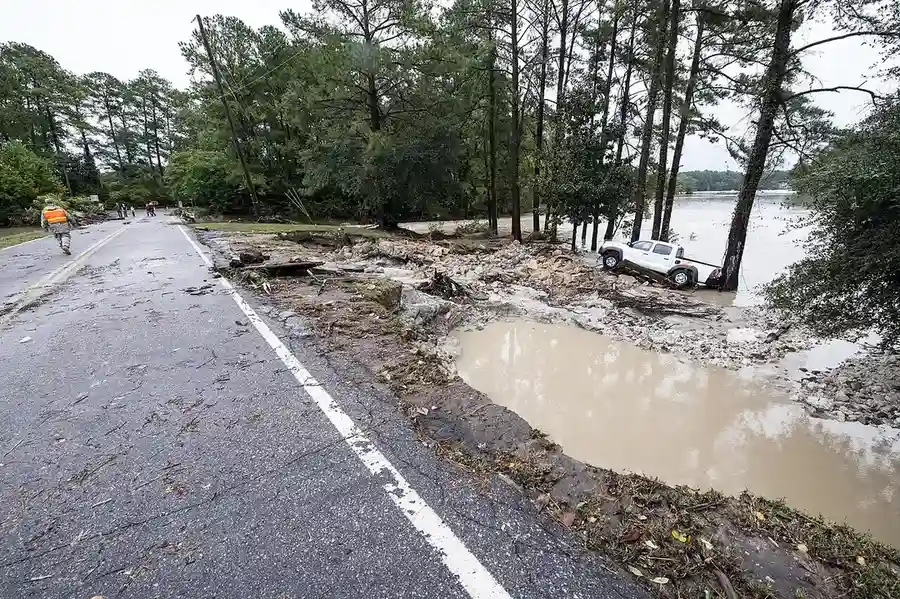
Then there are the storms with names and dates. Hurricane Hugo's remnants crossed the Midlands in 1989; Matthew and Florence brushed the region with days of rain; and in October 2015, Columbia lived through a flood event that breached the canal, drowned neighborhoods along Gills Creek and rewrote how this city thinks about drainage. Gutters are a small part of that story, but they are the part attached to your house: where they put a roof's worth of water during the worst hour of the year is a decision someone makes, on purpose or by neglect.

The ground finishes the argument. Much of the metro sits on red clay or sandy-clay soil that absorbs slowly once it is wet, and the region's humidity keeps whatever gets damp - fascia, soffit, crawlspace framing - damp for a long time. A gutter system in Columbia is therefore three jobs in one: catch the roof's water, carry it without spilling, and deliver it far enough from the house that clay and humidity cannot hand it back to the foundation.

Signs You Need Gutter Drainage Solutions

Mulch and soil washing out below downspouts

The bed keeps the score: every storm that rearranges it is a storm whose roof water landed unplanned.

Standing water against the foundation

Ponding at the wall after rain means discharge is ending where clay can hold it longest - the worst available address for it.

A damp or musty crawlspace

Crawlspace moisture in the Midlands has several sources, but a downspout ending at the wall above it is the first suspect to rule in or out.

Erosion channels in the yard

A carved path from a downspout shows water finding its own route - downhill, concentrated, and rarely where you would have chosen.

Splash damage and staining at the base of siding

Water released at the wall bounces back onto the wall's lowest boards - the system protecting the roofline while attacking the base.

Several downspouts converging on one small area

Where additions tied multiple drops into one corner, the ground there receives several roofs' worth of water at once.

Why Gutter Drainage Solutions Is a Standing Job in Columbia

Clay changes drainage arithmetic. Sandy soil forgives a short extension because water leaves vertically; clay absorbs slowly, so the water must leave horizontally - carried far enough that the slope, not the soil, finishes the job. Columbia's mixed sandy-clay lots sit between the two, which is why discharge has to be designed lot by lot, not by rule of thumb.

The region's rain pattern adds the volume argument. A summer cloudburst sends hundreds of gallons down a single downspout in minutes; any buried line serving it must be sized and sloped for that pulse, with cleanouts - a drainage line is a small sewer, and it is plumbed like one, not buried like a garden hose.

Finally there is the neighborly fact of Midlands lots: water moved off your foundation must not be delivered onto the next foundation. Discharge points are chosen with the lot's whole fall in mind - daylight at the low corner, a swale, the street side - so the solution does not become someone else's crawlspace.

Gutter Drainage Solutions Through the Columbia Year

Summer is the Midlands' main event: 'Famously Hot' is the city's own slogan, and the heat builds the towering afternoon cells that drop the year's hardest rain in the year's shortest windows. This is when undersized gutters show it, when clogged downspouts turn runs into waterfalls, and when overflow does its quiet work on fascia and foundations. Gutter work in summer is triage and honesty - what the storms expose gets fixed before the tropical season peaks.

Columbia winters are mild by northern standards and wet by any standard: long frontal rains, saturated clay, and gutters that must move water for days at a stretch. Freezes are brief but real, and a clogged run holding water can split at a seam on the coldest nights. Winter is also reading season - the overflow stains, settled soil and damp crawlspaces visible now are the map of what the summer storms did, and what spring's visit should fix.

Fall brings the double load: the tail of the tropical season, when a slow remnant can rain for days, and the start of leaf drop from the oaks. It is also the repair window - the weeks when cleaning, resealing and replacing happen in dry weather, before winter's steadier rains. Midlands homes that use the fall window enter winter with empty gutters and sound seams; homes that skip it carry a full debris load into the wettest stretch of the year.

Gutter Drainage Solutions in Depth

Drainage is the system's conscience: it asks where the water goes after the part everyone can see. Gutters are judged at the roofline, but their consequences accumulate at the foundation, in the crawlspace and across the yard - and drainage design is the discipline of making those consequences chosen rather than accidental. It is less visible than any other gutter work and protects more value than all of it.

The Midlands make drainage design a local specialty. Clay that holds water, rain that arrives in pulses, lots that fall in inconvenient directions and humidity that never lets a damp corner dry - each factor argues against improvisation. A designed exit for every downspout, checked after its first storm, is what 'done' means for a Columbia gutter system; everything upstream of it is collection.

Choosing the Right Help

Drainage work is the choice when the gutters work and the ground suffers - ponding, washouts, damp crawlspaces at downspout corners. It is the finishing discipline of the whole system, and on clay lots it is often the piece that was missing from the start.

The Climate Behind It

Columbia sits on the fall line, where the Saluda and Broad rivers come together to form the Congaree, and the city's water story starts with simple volume: roughly four feet of rain a year. It does not arrive gently or evenly - it arrives in summer afternoon thunderstorms that can drop an inch in an hour, in the long soaking rains of tropical systems moving inland, and in the steady winter fronts. Every roof in the Midlands hands all of that water to its gutters, and the gutters hand it to the ground. When any link in that chain fails, the house pays.

The debris story is just as local. Columbia's canopy is pine and oak: loblolly and longleaf pines that shed needles in every month, water oaks and live oaks that drop leaves, acorns and catkins across fall and spring. Add the spring pollen season, when a yellow film coats every surface in the city, and a Midlands gutter is never just a water channel - it is a debris channel that also carries water, and it fills on a schedule set by the trees, not by the homeowner.

How Gutter Drainage Solutions Works

Walk the water's current path in the rain's aftermath

Washouts, ponding lines, damp corners and erosion are read together - the ground keeps accurate records of every storm.

Design the exit for each downspout

Extension, buried line, emitter or a shared trunk - chosen per drop by distance, slope and what the yard can accept.

Install with slope verified, not assumed

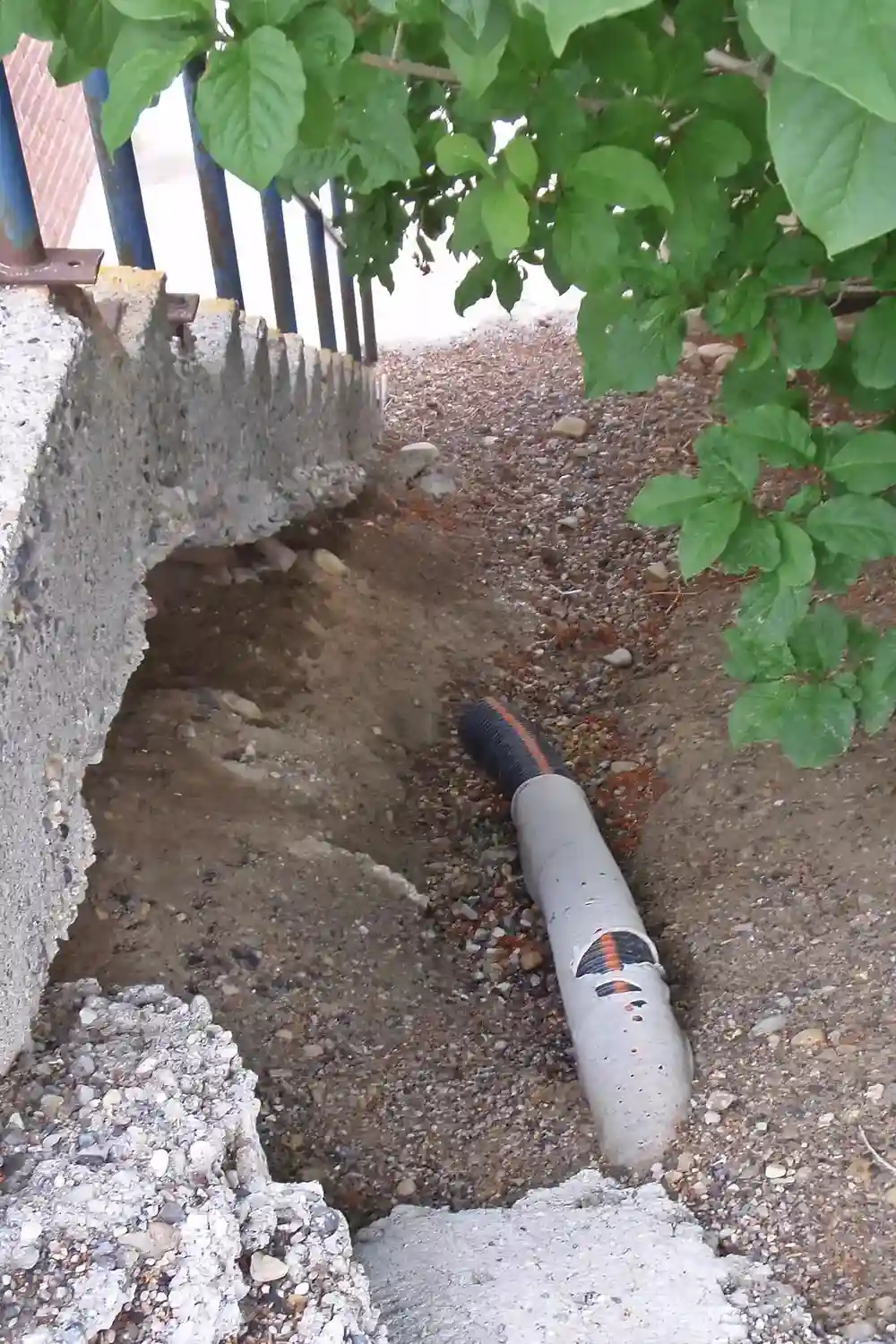
Buried lines are solid pipe, laid to a checked fall, with cleanout access; emitters are set where mowers and feet will spare them.

Prove it in the next storm and adjust

The system's first hard rain is its inspection: discharge points are watched, and anything that ponds gets corrected.

Doing It Yourself vs a Professional

The DIY Route

  • Corrugated flex pipe buried shallow clogs, crushes and roots in - it is the region's most-replaced drainage shortcut
  • Extending every downspout 'a few feet' without checking slope can move the pond, not end it
  • Tying a downspout into a line that also carries a patio or a neighbor's water overloads the pulse in exactly the worst storm
VS

The Professional Route

  • Reads the ground's storm records before designing anything
  • Uses solid pipe with verified fall and cleanouts for buried runs - built as plumbing, not landscaping
  • Designs discharge for the whole lot, including where the water goes after it leaves your wall

Keep It From Coming Back

A drainage system is buried infrastructure, and buried things survive on light, regular attention. These habits keep lines flowing and exits clear between professional checks:

  • Keep emitter lids and extension mouths clear of mulch creep and soil wash.
  • Flush buried lines through their cleanouts on the gutter calendar - they collect what the gutters miss.
  • Re-check grade after any landscaping; a raised bed against the wall can reverse a working discharge.
  • Keep the discharge map with the house file - buried lines are invisible infrastructure, and future digging should know where they run.
  • Watch the first storm after any change: drainage is empirical, and rain grades the work honestly.

Gutter Drainage Solutions in the Surrounding Communities

The communities around Columbia share its rain and its tree canopy - with their own twists of lake weather, pine cover and lot drainage.

Gutter Drainage Solutions in Blythewood

Blythewood is the rural-suburban town northeast of Columbia, known for large lots, equestrian properties and a small-town main street that growth is rapidly surrounding. Farmhouses and new subdivisions share its roads, and many properties carry barns and outbuildings alongside the house.

Gutter Drainage Solutions in Hopkins

Hopkins is a rural community southeast of Columbia, a landscape of farms, churches and old homeplaces along Lower Richland Boulevard. It has fed and neighbored the city for generations, and its homes stand on the kind of generous ground the city grew out of.

Gutter Drainage Solutions in Chapin

Chapin is the lake town on Lake Murray's north shore, a community that has grown from a lakeside village into one of the metro's most wanted addresses. Its streets run down to the water through tall pines, and its calendar runs on lake time - and lake weather.

Gutter Drainage Solutions in Lake Murray

Lake Murray is the Midlands' inland sea - a vast reservoir on the Saluda River, built for power in the 1920s and now ringed with shore communities from Lexington to Chapin. Its dam, its islands and its summer storm buildups shape the weather and the weekends of the whole region.

Where Gutter Drainage Solutions Is Needed Most

In the intown core and the east side - Downtown Columbia, Shandon, Elmwood, Cottontown, Five Points and Forest Acres, Rosewood, Olympia, Eau Claire, Dentsville - the housing runs from Columbia's oldest historic homes to postwar ranches, and gutter drainage solutions follows the canopy: heavy oak and pine loads on the older streets, half-round profiles on the historic stock, and shade that keeps eaves damp.

Across the river and the growth sides - Arcadia Lakes, St. Andrews, Harbison, Cayce, West Columbia, Springdale and Oak Grove, Irmo, Lexington, Northeast Columbia, Lower Richland, Pine Ridge - sit the subdivision waves of the 1970s onward, the lake-influenced west side and some of the metro's heaviest pine cover, which together make this the steadiest gutter drainage solutions territory in the metro.

Beyond the city line, the same work runs in Blythewood, Hopkins, Chapin, Lake Murray - small towns, fast-growing suburbs and lake communities where wooded lots, long runs and clay drainage add their own chapters. Every one of these area pages carries the local detail for gutter drainage solutions in that community.

Coverage, In Full

Gutter Drainage Solutions runs across the whole service map: Downtown Columbia, Shandon, Elmwood, Cottontown and Five Points; Forest Acres, Rosewood, Olympia, Eau Claire, Dentsville and Arcadia Lakes; St. Andrews, Harbison and the Northeast; Cayce, West Columbia, Springdale, Oak Grove and Pine Ridge across the river; and beyond in Irmo, Lexington, Blythewood, Hopkins, Chapin and the Lake Murray shore. One call covers all of it - the local pages above carry the detail for each. If your street is not named here, call anyway: routes grow with demand, and most Richland and Lexington County addresses are already within reach of a scheduled run.

From the Columbia Gutter Guides

How Long Do Gutters Last in South Carolina?

Planning blind - no idea whether the gutters on a South Carolina home have two years left or fifteen. Read lifespan by material and by maintenance: aluminum, galvanized, copper and vinyl each age differently under Midlands rain, heat and humidity.

Read the Guide

Gutter Drainage Solutions Questions

What is a pop-up emitter and does it work in Columbia?

A pop-up emitter is the yard-level cap on a buried line: water pressure lifts its lid during a storm and it closes flat afterward, invisible to mowers. In Columbia service it works well when the line feeding it has true slope - the emitter is the exit, not the engine; the fall in the pipe does the work.

Should downspouts tie into a French drain?

They can share a trench, but the waters are different jobs: roof water arrives in pulses and wants a sealed solid line; a French drain collects ground water slowly through perforations. Sound practice keeps the roof line solid and independent, sometimes alongside the drain, never dumped into it.

How are buried drainage lines sized for Columbia rain?

By the roof area they serve and the pulse they must pass - the cloudburst minutes, not the daily average. Solid smooth-wall pipe at a checked minimum fall, upsized when several drops share a trunk, with the exit at daylight or an emitter where the yard falls away.

What affects the cost of gutter drainage work in Columbia?

The number of downspouts served, the distance to a workable exit, digging conditions in clay and root zones, whether lines converge into a shared trunk, and the surface restored afterward. The walk in the rain's aftermath is what turns those variables into a scope.

How far from my Columbia home should downspout water discharge?

Far enough that the ground's slope takes over - on flat clay lots that usually means well past the foundation's drip line and onto visibly falling ground, which is why buried lines to a pop-up emitter exist. The visit's answer is measured from your lot's actual fall, not a generic number.

Are buried downspout lines worth it in Columbia?

Where extensions cross walks, beds or play space, or where the lot's fall starts far from the wall, yes - they move the discharge point to where the yard can accept it, permanently and invisibly. The line must be solid pipe at a true slope with cleanouts; done that way it is infrastructure, not a gadget.

Can drainage work fix a wet crawlspace in Columbia?

It fixes the share of the problem that roof water owns - which is often the largest share. If the ground's records show downspouts feeding the damp corner, redirecting them is the first and least costly structural fix. Other sources - plumbing, groundwater, vapor - are diagnosed separately and honestly.

Do buried drainage lines need maintenance in Columbia?

Light but real: cleanout flushes on the gutter calendar, emitter lids kept clear, and attention after any yard work above the line. A well-built line asks little; the maintenance exists to keep the little from becoming an excavation.

Please note: Columbia Gutter Pros is an independent directory and referral service, not a gutter contractor. The professionals reachable through this site are independent businesses; any agreement for work is between you and the professional you engage. Service information on this site is general educational material - the scope of any real gutter work is set by an on-site inspection.

Gutters Overflowing, Sagging or Pulling Away From the Roofline?

One call connects you with a gutter professional serving Columbia and the surrounding Midlands communities - installation, repair, cleaning, guards and drainage.

📞 Call Now
📞 Call Now